308: Introduction to Literary Criticism 3 Introduction to the systematic study of critical and theoretical approaches to literature; emphasis on problems of interpretation. (Crosslisted course offered as ENGLISH 308, WGSS 306.)
Literary criticism carries with it many, often contradictory, names and guises. If you rank the movies of the Marvel Cinematic Universe (MCU), you are already practicing a form of criticism. If you argue about the criteria for ranking these films, you are practicing the kinds of metacritical questions we’ll be considering in this class. If you wonder whether Jack Kirby or G. Willow Wilson or Jim Starlin or Louise Simonson are being offered fair and equitable pay for the use of their ideas on screen, you may also question how your answer is influenced by your perspective (whether Marxist, feminist, or postcolonial). Becoming aware of that perspective — its benefits and limitations, its ability to synthesize other perspectives or critique them or dialectically reverse them or all at once — is a way to practice the metadiscursivity typified by critical theory.
Like any kind of reading, the practice of engaging in literary criticism is political, collaborative, and dialectical. Is literature different from other kinds of writing or communication? How do stories give us ways to respond to crises like social inequity and climate change? How does our interpretation of a work of literature change over time? As one of the most significant theorists of the twentieth century, the French scholar Michael Foucault, puts it, theory involves “the effort to think one’s own history [to] free thought from what it silently thinks, and so enable it to think differently.”
Course Values
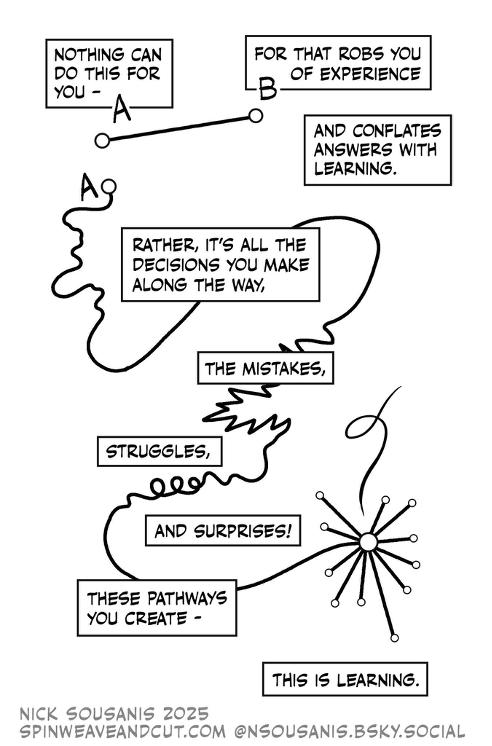
Reading: “The bad reader […] is the one who rushes with indecent, even journalistic haste, to decision, to decide on a reading, and thereby to have done with reading, once and for all.” —Julian Wolfreys, Readings: Acts of Close Reading in Literary Theory. This course requires a lot of reading for an undergraduate class. I realize this might seem daunting, given expectations in other classes. However, I do suggest you complete the readings yourself and not rely upon ChatGPT for summaries. Don’t conflate answers with knowledge. Don’t rob yourself of the learning experience.
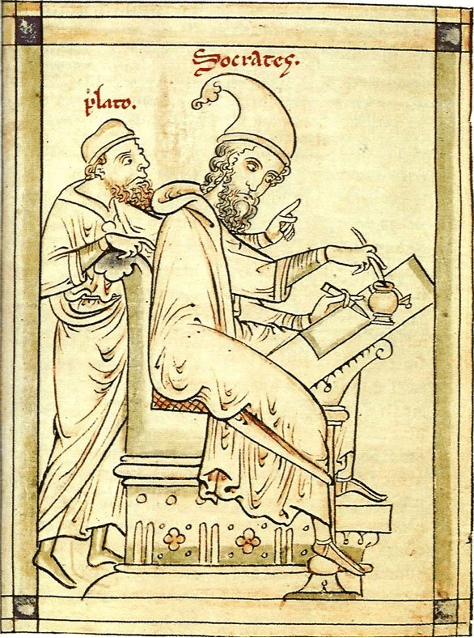
Lo-Fi Pedagogy: Despite being a scholar of technology and media, I’m becoming more suspicious of the online tools offered by big tech to our schools and private lives. One of the earliest low-fi philosophers is Plato, whose Phaedrus comments on the invention of writing as a technology. His avatar Socrates compares written text to a painting: “You know, Phaedrus, that is the strange thing about writing, which makes it truly correspond to painting. The painter’s products stand before us as though they were alive. But if you question them, they maintain a most majestic silence. It is the same with written words. They seem to talk to you as though they were intelligent, but if you ask them anything about what they say from a desire to be instructed they go on telling just the same thing forever” (275d-e).
As Jacques Derrida puts it, writing is a pharmakon: a poison and a cure for the problem of remembering. “The pharmakon can never be simply therapeutic,” Derrida says, “because it is always a sort of supplement added from the outside, coming to-do the work of memory only by risking the destruction of living memory” (99-100). Many media and forms of technology work similarly. Lo-fi artists combat the poisonous elements of technology by maintaining control of every aspect of the production process.
As Enrico Monacelli explains, “[l]o-fi is, at the heart of it, a way to record music yourself — poorly and roughly, for sure, but on your own terms. DIYing a track lets musicians question, directly and concretely, how music is made, under what conditions and even how that same music is valued and monetized” (19). Notice that lo-fi pedagogy is the mindful appropriation of a lower-technology environment for the sake of making concrete the technological supplements to knowledge we employ in most educational environments.
I employ a low-fi pedagogy in this class. This means that your readings must be printed out and brought to class every day along with your commonplace book (see below). Without them, I will ask you to leave class and mark you absent. Leave your laptops, kindles, smartphones, etc in your bag or away from you. I will do the same, except for taking attendance. There may be moments when these technologies work with our exercises, but largely, we’ll rely upon analogue technologies in this course.
Commonplace Book Assignment: “I write entirely to find out what I’m thinking, what I’m looking at, what I see and what it means. What I want and what I fear.” —Joan Didion, “Why I write.” The major project for the semester is the commonplace book. Commonplace books have been around since antiquity. Marcus Aurelias, Virginia Woolf, Dorothy Wordsworth, Octavia Butler, Ida Wells, and many other writers of note kept commonplace books. This semester you’ll create a commonplace book for our course readings. This journal should be a separate, bound, handwritten journal that you can exchange with someone else. Of course, you could just buy a spiral notebook and be done with it — but where’s the fun in that?
The commonplace book gives you a way to participate in class without having to come up with ideas on the spot, while also practicing notetaking and handwriting. If you are uncomfortable speaking spontaneously, you can refer to what you wrote in your commonplace book. This is encouraged. You will also want to put the writings produced through class exercises in your commonplace book.
Before each class session in which we have a reading due, I’ll ask you to copy out at least two quotations from the assigned readings using the selection criteria below. When we have more than one reading, I ask you to include one quotation from each reading. For each quotation you’ve written out, include brief information about its location in the reading (page number, source). Number your entries for easy reference. You will also want to devote some space in your commonplace book for books, podcasts, songs, or films referenced by our readings that you may want to see/red/listen to yourself.
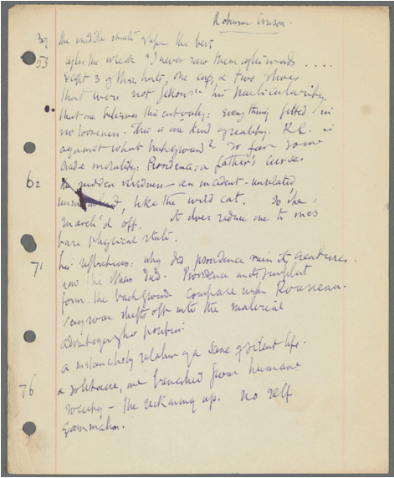
Bring your journal to class every day. Remember, these are not private journals. You will be sharing them occasionally. Be ready to share your annotations as part of class discussion. There are three days I’ll ask you to exchange commonplace books. You can see these on the schedule. Questions and observations should also do the following:
- Get beyond basic questions or observations of fact and instead work toward questions or observations of significance.
- Demonstrate close thought about the themes, style, arguments and other elements of our texts rather than broad or generic concepts.
- Genuinely open toward discussion during class
You might transcribe a smart quote from another student. You should feel free to make connections – literally – by drawing arrows between your discussion prep and your notes taken during class. If helpful, print out an image related to our topic after class, paste it on your page and annotate it.
As you go, you should compile a draft index on the last page of your notebook that includes the terms you’ve selected with references to the numbers of the entries that address that topic.
Selection Criteria
Entries should address one of the following areas. Your annotation will need to include an explanation of how it meets one of the following in your own words:
- an illustration of the author’s central argument or main point
- an articulation of why a passage confused you, along with what partial interpretation you may have
- a connection to other readings or classroom discussions (or discussions outside of class or in other classes)
- an example of a particularly evocative passage and what it stirred within you.
Note: If you have a compelling reason, such as a specific health condition, I will consider digital commonplace books, but I strongly prefer you maintain an analog book.
Intellectual Self-Description (DUE 9/28, 10 points): 500 words profile of what you think about a lot, what you have learned a lot about already, what you want to learn more about, the writerly/readerly activities/networks/communities in which you participate, and the paths that lead you to these interests. Submit to email with the elements listed below.
Illusion of Control (DUE 10/19, 10 points): Illusions of control describes a cognitive bias in which we assume we have more control over a situation than we really do. Test your own need for control over a week. Some examples may include tracking the weather, organizing a messy place, or managing a tight schedule. Keep a brief journal for three days. Note when you feel a false sense of control over random events. Write 500 words reflecting on your experience. How do you react when things go outside your plan?
Science Fiction Horizons (DUE 11/30, 20 points): José Esteban Muñoz suggests that art and science fiction allow us to ‘feel’ a queer utopia and imagine different futures. Select either Samuel R. Delany’s “Aye, and Gomorrah…” or NK Jemisin’s “The City Born Great.” Write a response paper around 500 words analyzing how your chosen text visualizes, challenges, or escapes the racialized and colonial gender structures outlined by Butler and Snorton, using Muñoz’s concept of utopian longing to evaluate the text’s success. Address the following dimensions:
- Violence of the Norm: How does the fictional world reflect the rigid, policing structures of gender dimorphism and racial classification that Butler and Snorton critique? (e.g. How are Jemisin’s avatar’s hunted by the sterile, white forces of “The Enemy,” or how are Delany’s Spacers commodified by the ‘frelks’?)
- Alternative Flesh and Kinship: Snorton talks about the “trans/racial commons” – spaces where marginalized bodies find new ways of being and surviving together outside of white, nuclear-family norm. How do the relationships in your chosen text (the street-based, living connection between Jemisin’s city-avatars or the shared alienation of Delany’s spacers) create a version of these commons?
The Utopian Horizon: Applying Muñoz, does the text offer a complete escape into a new future? Or is it a text of ‘longing’ – showing characters who are still trapped but stubbornly pointing toward something better?
Schedule
| Date | Reading / Film |
|---|---|
| 8/26 | bell hooks. “Theory as Liberatory Practice.” Yale Journal of Law & Feminism, vol. 4, no. 1, 1991, pp. 1–12. |
| 8/28 | Astra Taylor, director. Examined Life. Sphinx Productions, 2008. |
| 8/31 | Astra Taylor, director. Examined Life. Sphinx Productions, 2008. |
| 9/2 | Astra Taylor, director. Examined Life. Sphinx Productions, 2008. |
| 9/4 | Audre Lorde. “Poetry Is Not a Luxury” and “The Master’s Tools Will Never Dismantle the Master’s House.” Sister Outsider: Essays and Speeches, Crossing Press, 1984. Dan Sinykin and Jo Winant. Close Reading for the Twenty-First Century. Princeton UP, 2025, pp. 1–36. |
| 9/9 | Kirby Dick and Amy Ziering Kofman, directors. Derrida. Jane Doe Films, 2002. Zeitgeist Films. |
| 9/11 | Kirby Dick and Amy Ziering Kofman, directors. Derrida. Jane Doe Films, 2002. Zeitgeist Films. |
| 9/14 | Kirby Dick and Amy Ziering Kofman, directors. Derrida. Jane Doe Films, 2002. Zeitgeist Films. |
| 9/16 | Mark Fisher. Capitalist Realism: Is There No Alternative? Zero Books, 2009. Fredric Jameson. “Postmodernism and Consumer Society.” Postmodernism and Its Discontents: Theories, Practices, edited by E. Ann Kaplan, Verso, 1988, pp. 194–95. |
| 9/18 | George Saunders. “The Semplica-Girl Diaries.” The New Yorker, 15 Oct. 2012. |
| 9/21 | Nathan Apodaca. “Dreams.” TikTok, 2020. Fleetwood Mac. “Dreams.” Rumours, Warner Bros. Records, 1977. Kiese Laymon. “Now Here We Go Again, We See the Crystal Visions.” Vanity Fair, 19 Nov. 2020. |
| 9/30 | Todd McGowan. “The Formation of Subjectivity.” Enjoying What We Don’t Have: The Political Project of Psychoanalysis, University of Nebraska Press, 2013. |
| 10/2 | Mark McGurl. “How Amazon Is Reshaping Contemporary Literature.” Jacobin, 14 Nov. 2021. |
| 10/5 | Chuck Tingle. Taken Hotly by My Handsome Physically Manifested Hot Take. Amazon Digital Services LLC, 2017. Kindle ed. |
| 10/7 | Anna Kornbluh. “Writing.” Immediacy, or, The Style of Too Late Capitalism, Verso, 2023, pp. 69–93. |
| 10/9 | Anna Kornbluh. “Against Anti-theory.” e-flux Notes, 9 Feb. 2024. |
| 10/14 | Lauren Berlant. “Cruel Optimism.” differences: A Journal of Feminist Cultural Studies, vol. 17, no. 3, 2006, pp. 20–36. |
| 10/16 | Shannon Walsh, director. Illusions of Control: What Escapes Production. 2019. |
| 10/19 | Shannon Walsh, director. Illusions of Control: What Escapes Production. 2019. |
| 10/21 | Shannon Walsh, director. Illusions of Control: What Escapes Production. 2019. |
| 10/23 | Michelle de Kretser. Theory & Practice. Text Publishing, 2024. |
| 11/2 | Eve Kosofsky Sedgwick. “Queer and Now.” Tendencies, Duke UP, 1993, pp. 1–20. |
| 11/6 | José Esteban Muñoz. “Introduction: Feeling Utopia.” Cruising Utopia: The Then and There of Queer Futurity. 10th anniversary ed., New York UP, 2019, pp. 1–18. Frank O’Hara. “Having a Coke with You.” Lunch Poems, City Lights Books, 1964. |
| 11/9 | Samuel R. Delany. “Aye, and Gomorrah . . .” Dangerous Visions, edited by Harlan Ellison, Doubleday, 1967, pp. 457–75. Reprinted in Strange Horizons, 23 Nov. 2015. |
| 11/13 | Judith Butler. “Racial and Colonial Legacies of Gender Dimorphism.” Who’s Afraid of Gender?, Farrar, Straus and Giroux, 2024, pp. 39–68. |
| 11/16 | C. Riley Snorton. “Introduction.” Black on Both Sides: A Racial History of Trans Identity, University of Minnesota Press, 2017, pp. 1–17. |
| 11/18 | N. K. Jemisin. “The City Born Great.” Reactor, Tor Publishing Group, 2016. |
| 11/30 | Anna Tsing. “Contamination as Collaboration.” The Mushroom at the End of the World: On the Possibility of Life in Capitalist Ruins, Princeton UP, 2015, pp. 27–36. |
| 12/4 | Nnedi Okorafor. “Spider the Artist.” Lightspeed, no. 10, Mar. 2011. |
| 12/7 | Fabrizio Terranova, director. Donna Haraway: Story Telling for Earthly Survival. 2016. |
| 12/9 | Fabrizio Terranova, director. Donna Haraway: Story Telling for Earthly Survival. 2016. |
| 12/11 | Fabrizio Terranova, director. Donna Haraway: Story Telling for Earthly Survival. 2016. |
Sources
Readings and Descriptions
Jon Hegglund, Introduction to Literary Criticism, Spring 2026, Washington State University.
Anna Kornbluh, Thinking Big Thoughts with Literature, Fall 2022, University of Illinois-Chicago.
Phil Wegner, Theory and Practice of Modern Criticism: Theory, Literature, and the Art of Reading, Fall 2019. University of Florida.
Polices and Design
John Aycock and Jim Uhl, “Choice in the Classroom,” ACM SIGCSE Bulletin, vol. 37, no. 4, pp. 84-88.
Ashley Boyd, Young Adult Literature, Fall 2015, Washington State University.
Anne-Marie Womack, Annelise Blanchard, Cassie Wang, Mary Catherine Jessee, Accessible Syllabus, 3 August 2016, Available here: https://accessiblesyllabus.com/
Anne-Marie Womack, First-Year Writing: Rhetoric and Research in the Digital Era, Spring 2014, Tulane University.
Assignments
Adelman, Joseph M. “Commonplace Book Assignment.” Joseph M. Adelman, 4 Sept. 2014, josephadelman.com/2014/09/04/commonplace-book-assignment/. Course assignment for HIST 151, United States History to Reconstruction, Framingham State University, Fall 2014.
Cordell, Ryan. “Commonplace Book.” ENGL 475: Literature and Other Disciplines, Spring 2025, University of Illinois Urbana-Champaign. Course assignment, “Building a Better Book.”
Hess, Jillian. “Re-Noted: Virginia Woolf’s Handmade Notebooks.” Noted, 14 Aug. 2023, jillianhess.substack.com/p/re-noted-read-like-virginia-woolf.
Anna Kornbluh, Thinking Big Thoughts with Literature, Fall 2022, University of Illinois-Chicago.
 Roger Whitson