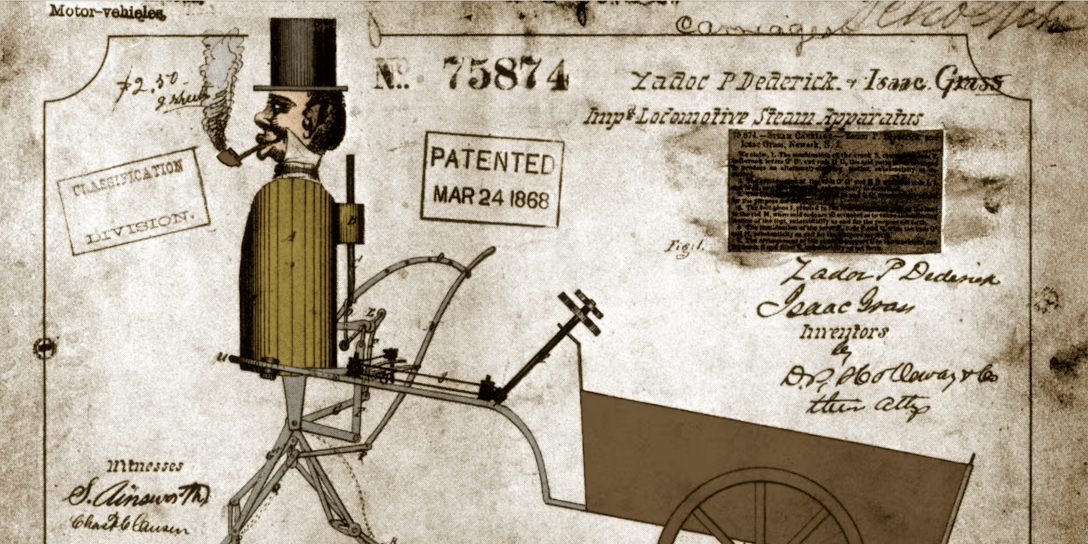
This course focuses on the media materialities, social histories, and literary imaginaries informing the rise of artificial intelligence. AI has been implicated in the fall of the University, the destruction of the humanities, the rise of technofascism, and the extinction of the human being. Yet, we’ll see that not only are the arguments surrounding AI not new, but they are also central in the history and discourse of the humanities. This course will sketch a dialectic between human agency and its articulation in a wide variety of posthuman conditions. Karl Marx saw human labor reduced by industrial machinery to being “mere linkages” between technical systems. Mary Shelley asks us what we owe the artificial lives we create. Gilbert Simondon displaces the human entirely in the construction of technology, suggesting an ongoing cybernetic entanglement he called technogenesis. We will look not only at these historical sources, but also contemporary attempts to address AI in the University and its relationship to teaching and politics. Assignments include a significant culminating written or multimodal project or annotated syllabus/lesson plan, leading class two times during the semester, and ongoing participation.
Potential readings taken from the following:
- Mary Shelley, Frankenstein
- Auguste Villiers de l’Isle-Adam, The Future Eve
- Nalo Hopkinson, Midnight Robber
- Kazuo Ishiguro, Klara and the Sun
- Issac Asimov, I, Robot
- Peter Watts, Blindsight
- Naomi Klein and Astra Taylor, End Time Fascism: And the Fight for the Living World
- Karl Marx, “Fragment on Machines”
- Megan Ward, Seeming Human: Artificial Intelligence and Victorian Realist Character
- Tamara Ketabgian, The Lives of the Machines: The Industrial Imaginary in Victorian Literature & Culture
- Alan Turing, “Computing Machinery and Intelligence”
- Friedrich Kittler, “There is No Software” and “Protective Mode”
- Jussi Parikka, Operational Images
- Trevor Paglen, How to See Like a Machine
- Adrian MacKenzie, Machine Learners: Archaeology of a Data Practice
- Wolfgang Ernst, “From Media History to Zeitkritik,” “Cultural Archive vs. Technomathematical Storage,” Technologos in Being
- Leaf Weatherby, Language Machines
- Günther Anders, The Obsolescence of the Human
- Gilbert Simondon, On the Existence of Technical Objects
- Yuk Hui, Kant Machine: Critical Philosophy After AI
- Bernard Dionysius Geoghegan, Code: From Information Theory to French Theory
- MLA-CCCC Joint Task Force on Writing and AI
- N. Katherine Hayles, Bacteria to AI: Human Futures with Our Non-Human Symbionts
- Safiya Noble, Algorithms of Oppression
- “Where We Are: AI and Writing” (Special Forum), Composition Studies.
- Matthew Kirschenbaum and Rita Raley, “AI and the University as a Service.”

